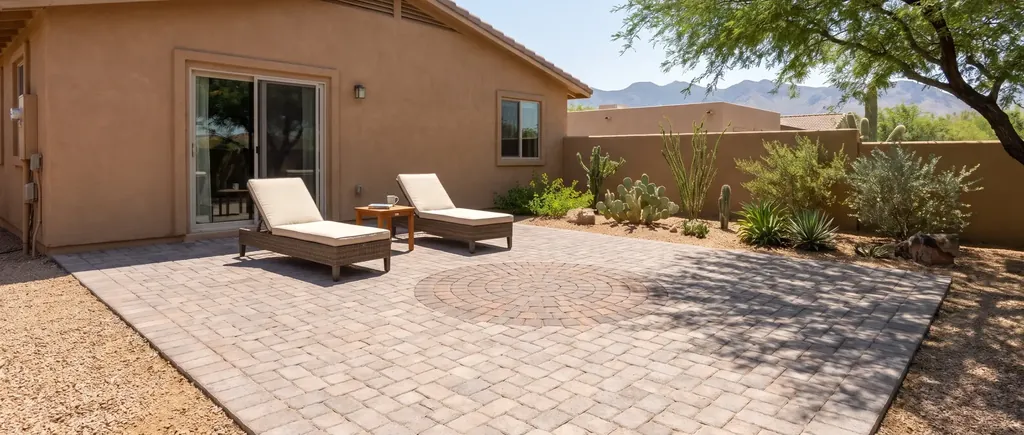
Paver patios
Interlocking paver patios with a compacted base, a restrained edge and a steady fall away from the house.
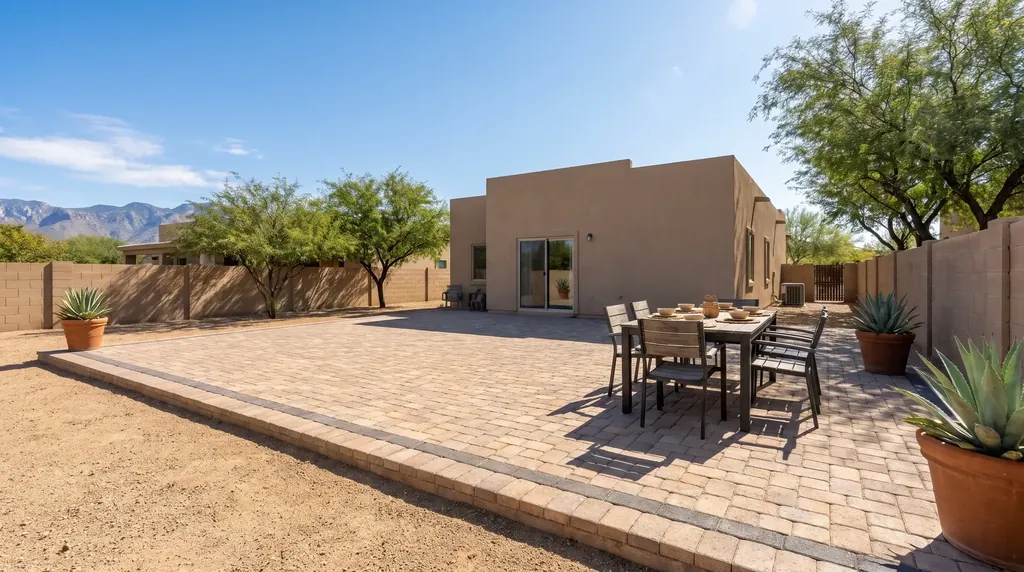
Free on-site estimates across the Tucson metro
We design and build paver and stone patios, driveways, walkways and pool decks across the Tucson metro. Every surface goes down on an excavated, compacted base made for caliche, summer heat and monsoon water.
Most people pick a patio by the paver on top. We start with the ground underneath, because that is where Tucson patios fail. Soil here is often thin over caliche, rain arrives in a few violent storms, and a surface laid on loose fill looks fine for one season before it starts to dip, rock and pond.
So every job begins with excavation to a depth set by what the surface will carry. We compact the soil, build up crushed aggregate in thin compacted layers, set a fall so storm water runs away from the house, and fix a restraint along every edge.
On top we lay concrete pavers, travertine, clay brick, flagstone or cut stone, chosen for the use and for how hot it will feel on a July afternoon. That is our patio hardscaping work: the ground you walk, drive and sit on, built properly.
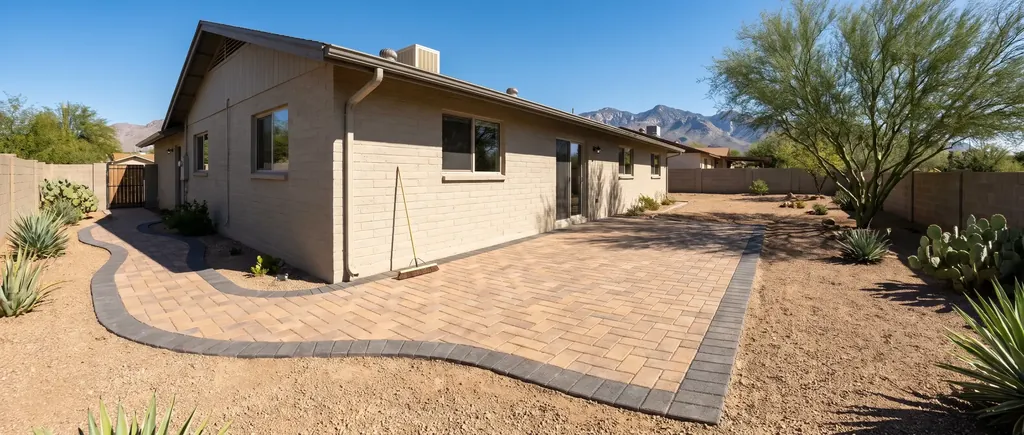
Interlocking paver surfaces for patios, drives, paths and pool decks, built on a base sized for the job it has to carry.
Interlocking paver patios with a compacted base, a restrained edge and a steady fall away from the house.
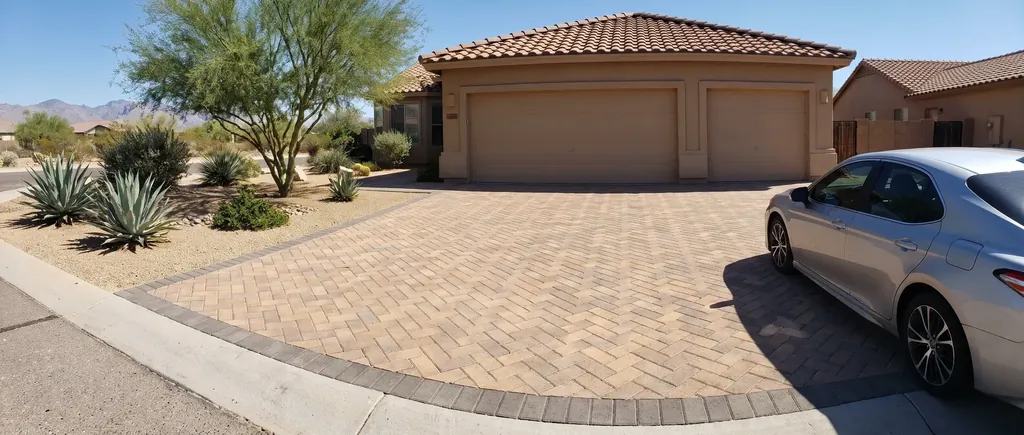
Driveways built to a vehicle load base, laid in a pattern that locks under turning tires and lifts out cleanly for repairs.
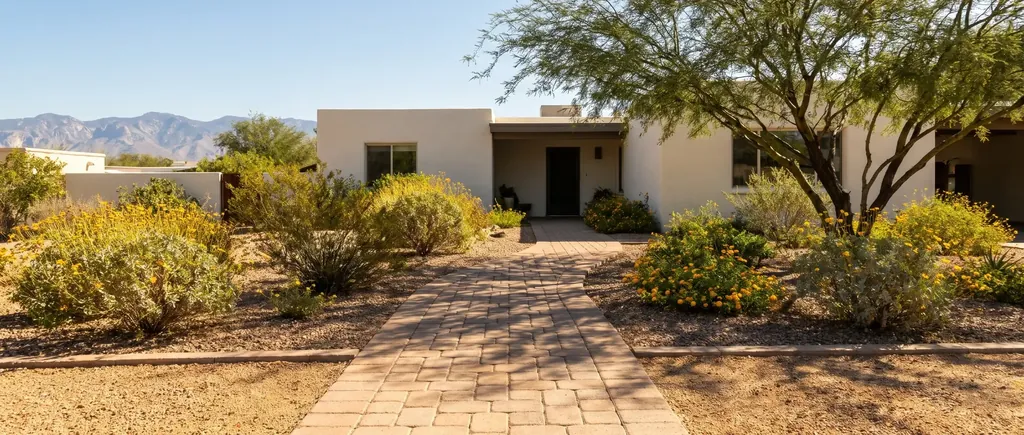
Front entries, side yard runs and garden paths with straight edges that stay straight against gravel and planting.
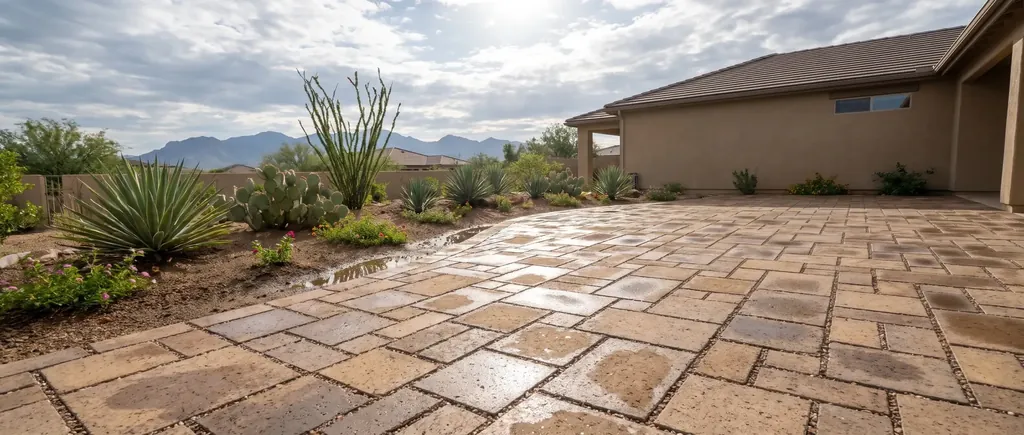
Open jointed paving over a stone reservoir that lets monsoon water soak in where it falls instead of sheeting off.
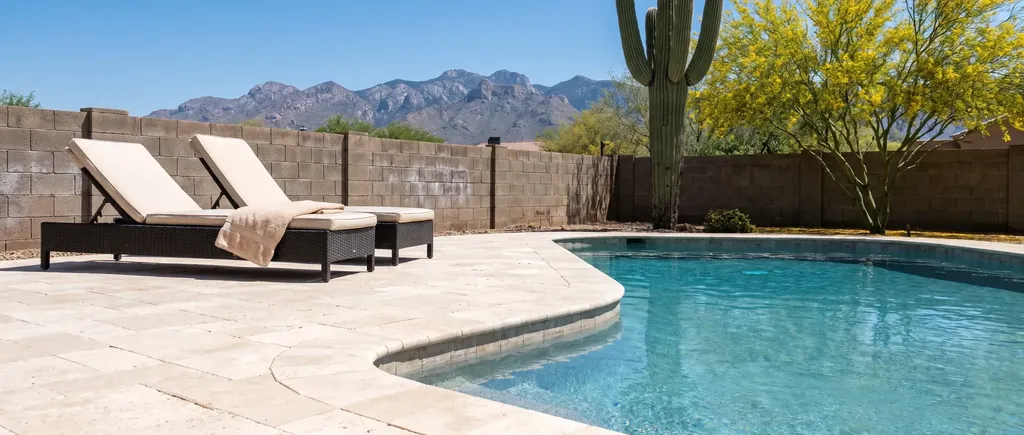
Pool decks in pavers or travertine, chosen for heat and grip underfoot and pitched so water runs away from the pool.
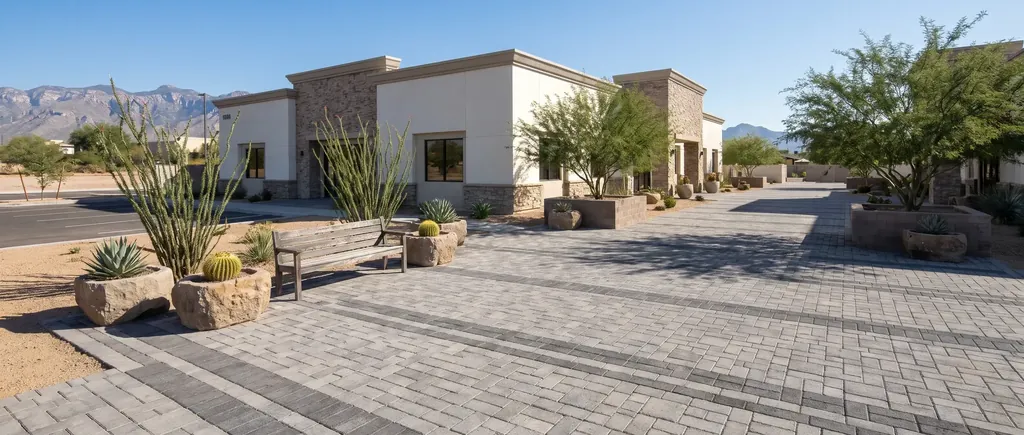
Entry plazas, courtyards and drive aisles for commercial and HOA properties, scheduled around the people using them.
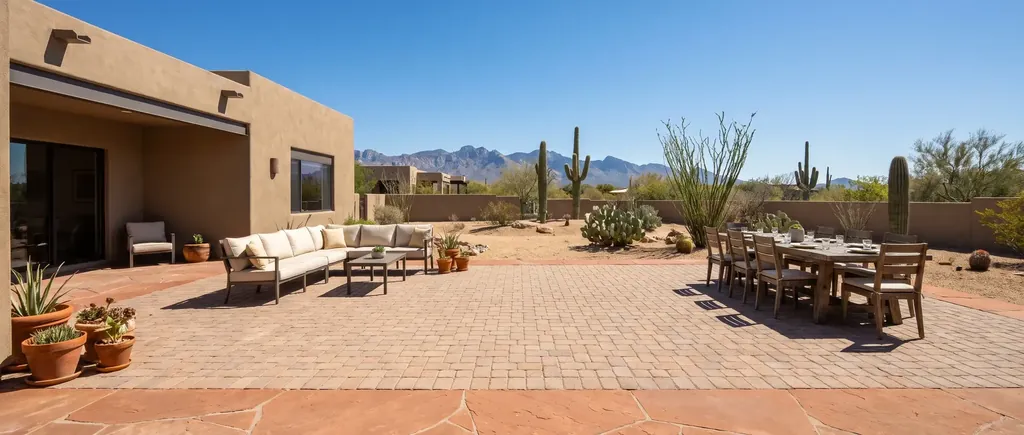
Patios designed and built as outdoor rooms, in pavers, flagstone or natural stone, laid out around how the space will be used.
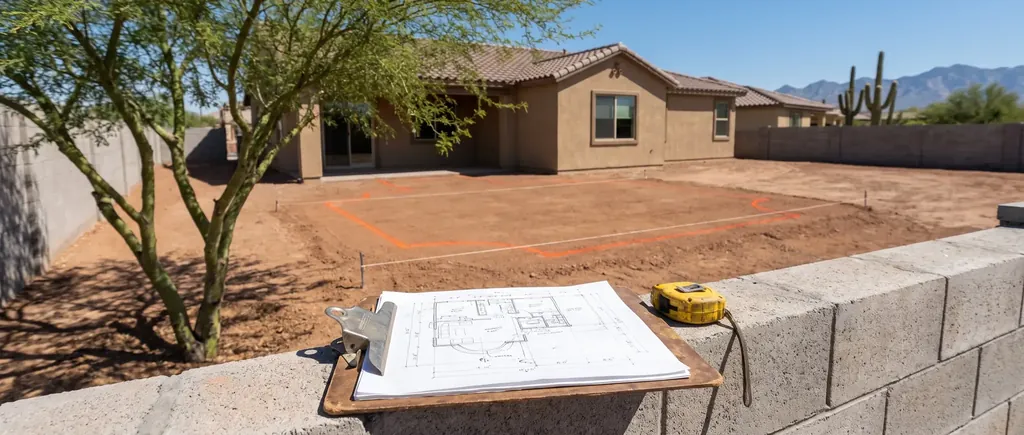
A layout drawn around sun, shade, doors and furniture before anything is excavated, then built by the same crew.
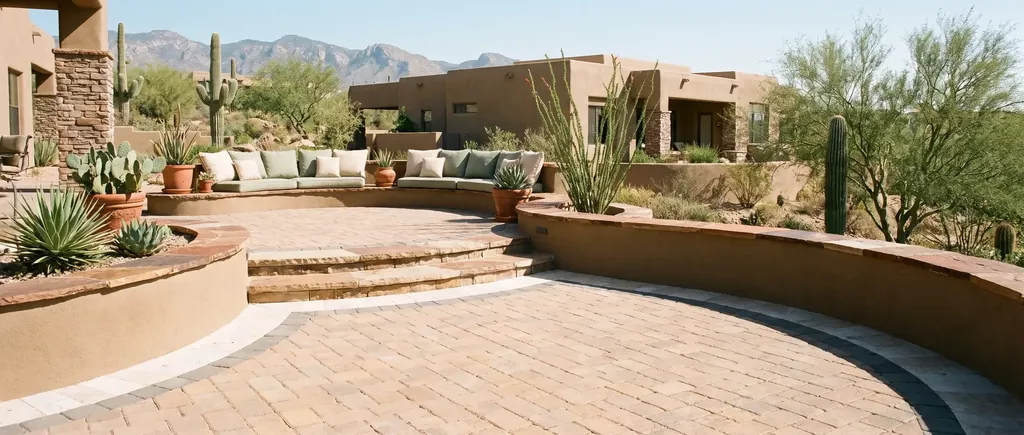
Mixed materials, borders, curves, steps and built in seating for a patio that belongs to one house and no other.
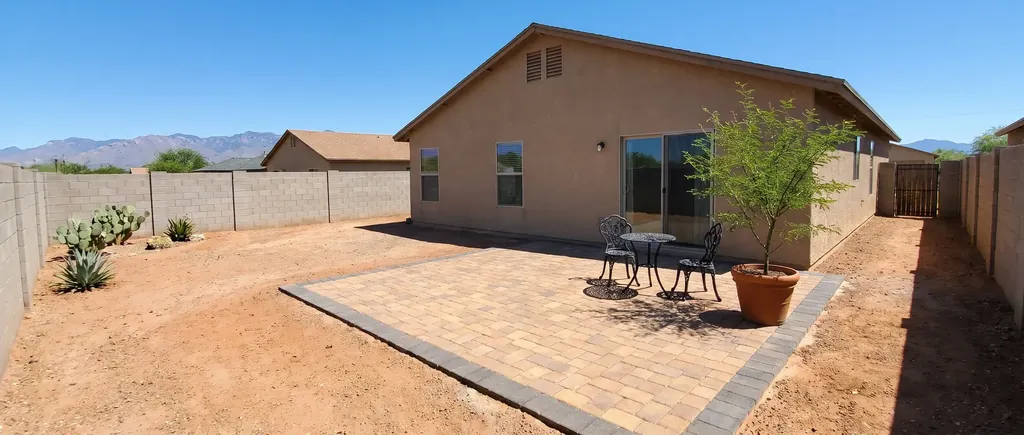
Back yard patios that turn bare dirt or a cracked slab into a usable outdoor room off the house.
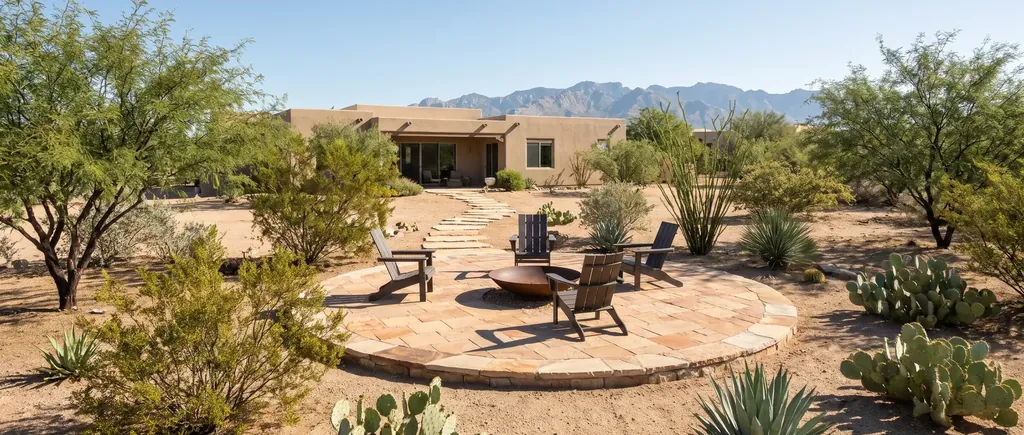
Front courtyards, side yard sitting areas and detached patios out in the yard, wherever an outdoor floor makes sense.
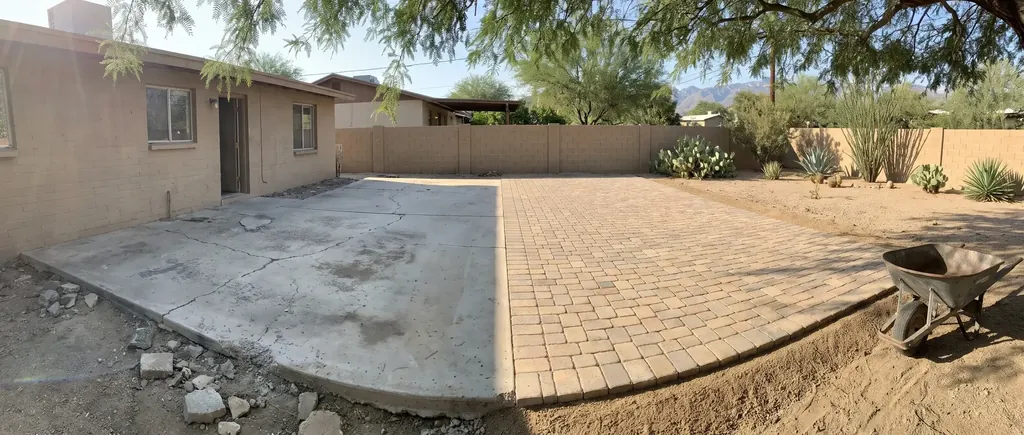
Cracked slabs removed or overlaid, tired patios enlarged and reworked, and old paving relaid on a corrected base.
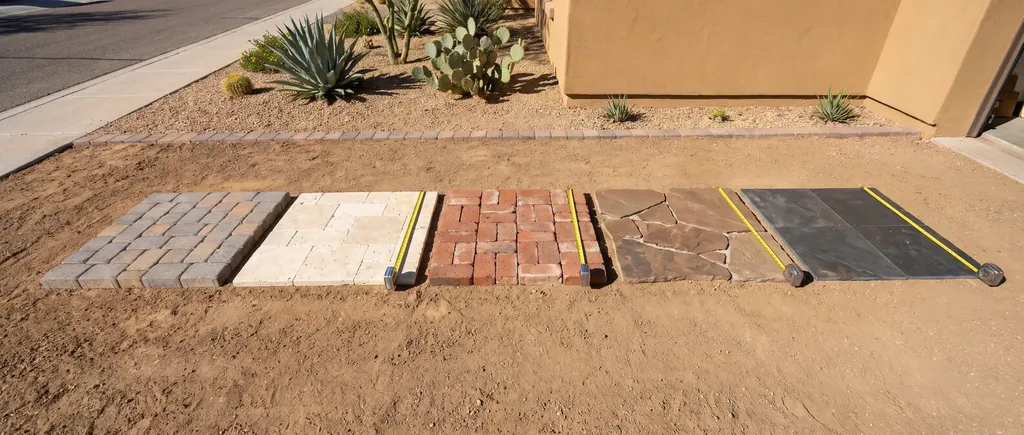
Concrete, travertine, brick, flagstone and other natural stone compared on heat, wear, upkeep and where each one belongs.
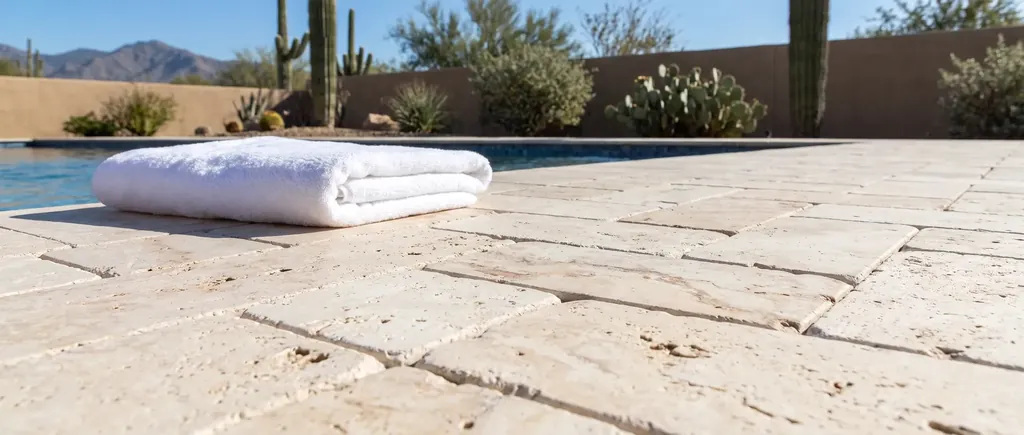
Natural travertine for patios and pool decks, prized for staying cooler underfoot than most paving in the same color.
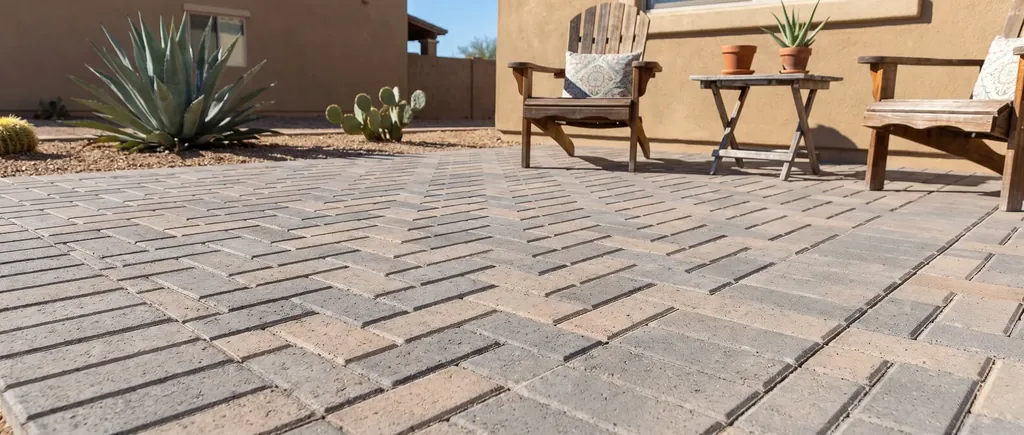
Manufactured interlocking pavers in the widest range of shapes and colors, and the strongest choice for driveways.
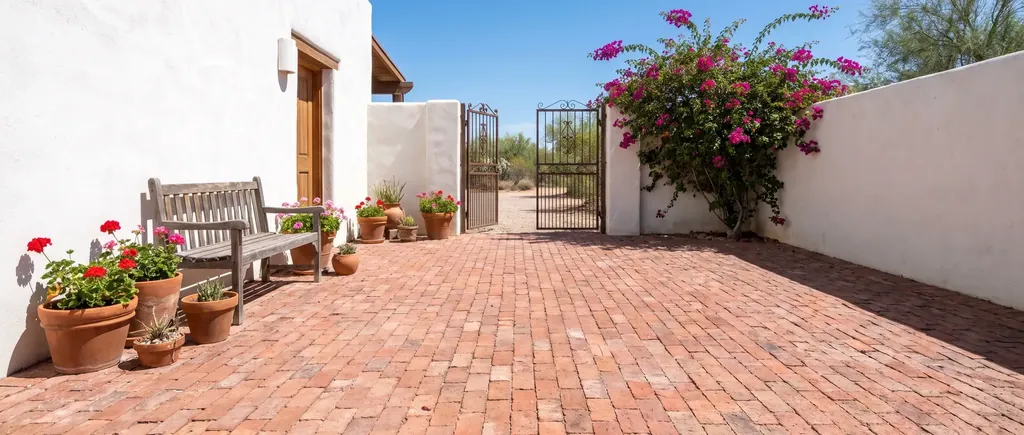
Fired clay brick for entries, courtyards and borders, with color that runs through the unit instead of sitting on top.
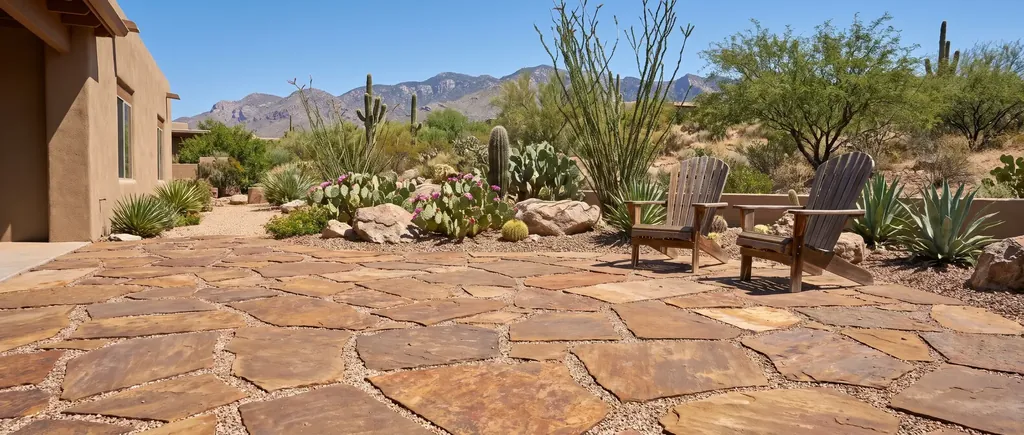
Irregular flagstone fitted piece by piece, set dry in gravel or mortared on a slab depending on how the patio is used.
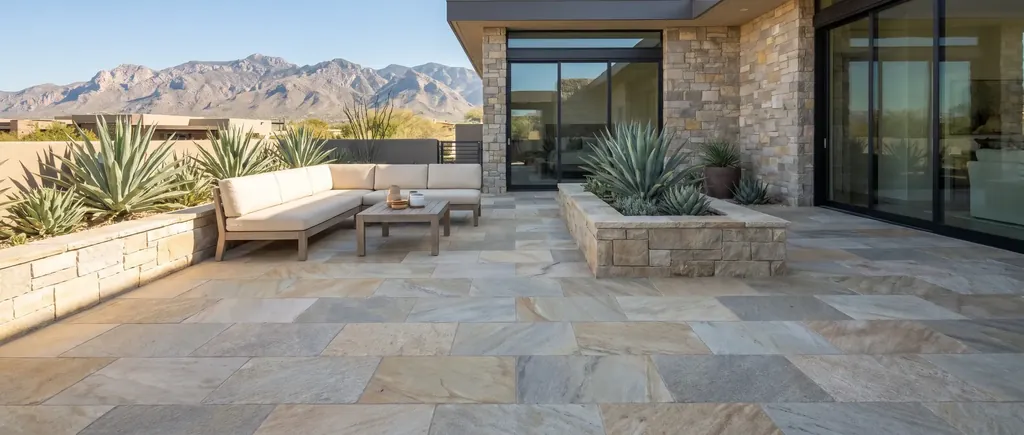
Quartzite, slate, limestone and other cut stone for patios that want the weight and texture only real stone gives.
Pavers and patios are the whole of what we do, and the crew that excavates is the crew that lays the last paver.
Your estimate states the excavation depth, base thickness, material and edge detail, so you can compare it line by line with other bids.
A dark paver can look rich on a sample board and be too hot to stand on by July. We choose color and finish with bare feet in mind.
Every layout gets a set fall and a place for the water to go, so a summer storm drains off instead of pooling at the back door.
We walk the space with you, check the levels and the soil, look at access through the side gate, and talk through how you want to use the area.
We sketch the shape around doors, sun and furniture, and bring samples so you can see and feel each option in your own light.
You get a scope that lists removal, base depth, material, pattern and edging, line by line.
Excavation, compaction, base, bedding, laying, cutting, edge restraint, joint sand and final compaction, in that order.
We walk the finished surface with you, explain the first few weeks of joint settling, and leave spare pavers or stone for future repairs.
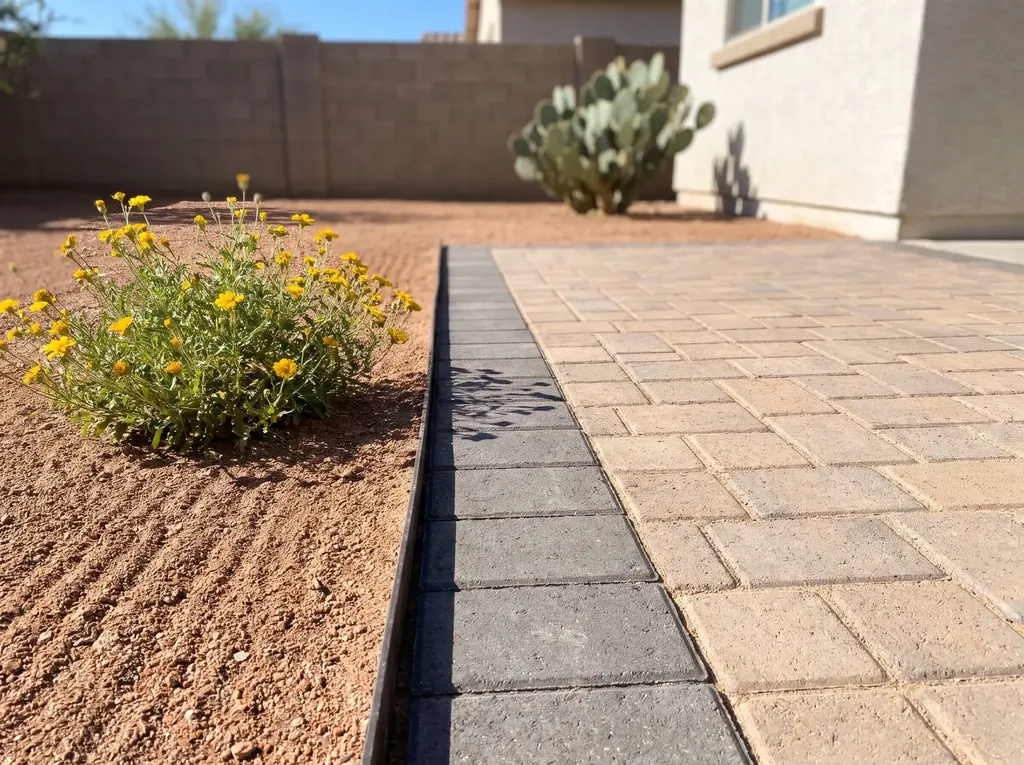
Look at where a patio meets the gravel. A straight, level soldier course tells you the base was built and the edge restrained. A wavy border with opening gaps tells you the opposite. We cut every border with a wet saw and pin a restraint behind it, so the line you see on day one is the line you see years later.
We build across Tucson and the surrounding communities, including Oro Valley, Marana, Catalina Foothills, Casas Adobes, Vail, Sahuarita, Green Valley, Rita Ranch and Tanque Verde.
It depends on what you are building. A driveway needs a deeper base than a patio, a pool deck adds curved cuts around the pool and drainage work, and a curved walkway takes more cutting than a straight one. Removing old concrete, the material, your soil and back yard access all play a part too. We visit, measure and give a free written estimate.
Larger areas spread setup, delivery and equipment across more ground, and use matters: a driveway needs a deeper base than a patio of the same size. We price your actual site during a free on-site estimate.
A well built paver patio adds usable outdoor living space, which in Tucson is part of how a house is lived in most of the year. A sunken or heaved patio does the opposite, so the value sits in a surface that stays level.
The pavers themselves are tough and rarely wear out. What decides the life of a patio is the base under it, which is why we excavate, compact in layers and restrain every edge. If one area ever settles, we lift those pavers, correct the base and relay the same units, so the patio is repaired rather than replaced.
Sweep and rinse it, top up the joint sand when it drops, usually after the first monsoon, and pull weeds while they are small. Sealing is optional and depends on the material.
We plan for the storm before we lay anything. Every surface gets a steady fall away from the house toward a planting bed, gravel strip or drain, and sits on a compacted aggregate base that does not turn soft when it gets wet. Edges are restrained so heavy runoff cannot wash out the outer rows.
Tell us what you want to build, roughly how big it is, and what is there now. We will come out, check the levels and send a written estimate.
We will be in touch to set a time to visit. If it is urgent, call (520) 555-0153.